RSS

BoC warns of 'subdued' outlook for housing market as rate hike raises borrowing costs

The Bank of Canada's rate hike Wednesday is set to translate to higher borrowing costs for homebuyers, adding further pressure as the real estate sector also copes with rising prices for construction materials.

The central bank raised its benchmark interest rate by a quarter-point to 2.5 per cent, the first increase in more than three years, as it warned that inflation driven by the war in the Middle East is likely to spread.

"There's a number of things weighing on housing right now," the bank's senior deputy governor Carolyn Rogers told reporters, as she described a "subdued" outlook for the sector.

"Certainly, borrowing rates are currently weighing a bit on the housing market. An increase will add to that a bit on the margin, so I think the outlook we've got for housing in the forecast here takes all of that into account."

The big question is whether the central bank's move is a one-time adjustment or the start of a sustained tightening cycle, said Phil Soper, president and CEO of real estate firm Royal LePage.

He said the sector's "prolonged weakness is already weighing on economic growth, and higher borrowing costs will only deepen that challenge."

Shawn Zigelstein, a broker for Royal LePage Signature Realty, said he believes the rate hike won't have a major effect on consumer confidence just yet.

"It's not like we are in a market like we were back in 2022 where the prices are increasing substantially on a regular basis," he said in an interview.

"A quarter-point adjustment really shouldn't make too much of a difference on someone's mortgage payments at this point."

The central bank's key policy rate had held steady for nearly a year following a series of cuts. Inflation ticked up to 3.1 per cent in September due to high gas prices, and the bank said an increase to the rate is necessary to reduce the risk that elevated energy prices spill over to other goods and services.

Zigelstein said clients he speaks with are more concerned about other day-to-day costs and whether the overall inflation environment makes it the right time to buy a home.

"They have been worried about other factors, including tariffs and such. Are they going to have the jobs that they had? Are their investments going to do what they've been doing? So they've got bigger concerns than worrying about interest rates," he said.

"Now, of course, if the rates start to change a little bit, then we will start to see potentially a little bit of a pullback on what people are spending because borrowing costs will be higher."

While Canada "is not facing a broad mortgage crisis," there are signs of financial pressure concentrated in specific regions such as the Greater Toronto and Hamilton Area and southwestern Ontario, said Aled ab Iorwerth, deputy chief economist for Canada Mortgage and Housing Corp., earlier this week.

He said trade tensions are weighing on key manufacturing sectors such as the automotive industry in those areas, leading to labour-market uncertainty and softer housing market conditions.

CMHC said Ontario's mortgage arrears rate reached 0.32 per cent in the second quarter, which is still below historical peaks but expected to continue rising through mid-2027. British Columbia and Atlantic Canada are expected to see a more moderate rise in mortgage arrears over the same period.

"The mortgage system is adjusting, but these early warning signs, particularly in parts of Ontario, need to be monitored closely," ab Iorwerth said in a news release.

Don Kottick, president of Re/Max Canada, said that while an interest-rate increase "may give some buyers pause," more balanced market conditions in many regions are creating opportunities for buyers, including greater choice and room to negotiate.

In September, the national average sale price fell 1.6 per cent year-over-year to $666,538, according to the Canadian Real Estate Association. National home sales were down 7.7 per cent from the same month last year, as the association cited higher fixed mortgage rates and the Bank of Canada's "notably more hawkish tone."

Fixed rates are largely unaffected by the Bank of Canada's decision, having already moved higher in recent months in line with the bond market. But further movement in the bond market into 2027 could prompt mortgage costs to jump, which "would have a dampening impact on home purchases," said Michael Waters, CEO of Minto Group, a real estate developer.

"Higher rates, everything else held equal, will reduce levels of purchaser activity for anything durable of size — cars and houses, certainly," Waters said in an interview.

"The housing sector is very slow right now and so that obviously would be a concern for anyone in that sector."

Meanwhile, the central bank said Wednesday that higher energy and import costs are expected to raise the costs of housing construction and maintenance through higher prices for materials and equipment.

Any increase to the cost of credit will also have an effect on the ability to build new projects, particularly new housing and supporting infrastructure, said Nicole Emmett, vice-president of communications, marketing and member services for the Canadian Construction Association.

"A home isn’t a home without the roads, sewers and watermains that support it, and higher borrowing costs put pressure on the margins of the contractors building them, which are already stretched by global supply chain disruptions and material costs," she said in a statement.

"Many contractors also rely on financing for equipment, materials and day-to-day operations."

Waters said higher interest — construction loans are based on a floating rate — along with rising input costs "will squeeze margins" and potentially lead to fewer large-scale project completions in the coming years.

"Certainly projects are far more challenged today than they would have been six months ago, pre-Iran war," he said.

"The impact would be fewer projects meeting economic feasibility tests and more projects probably sitting idle until market conditions improve, so that could have a negative impact on the creation of new housing supply."

Sammy Hudes, The Canadian Press

Read

卡尔加里房地产市场 - 9月份独立屋成交量上升,2026

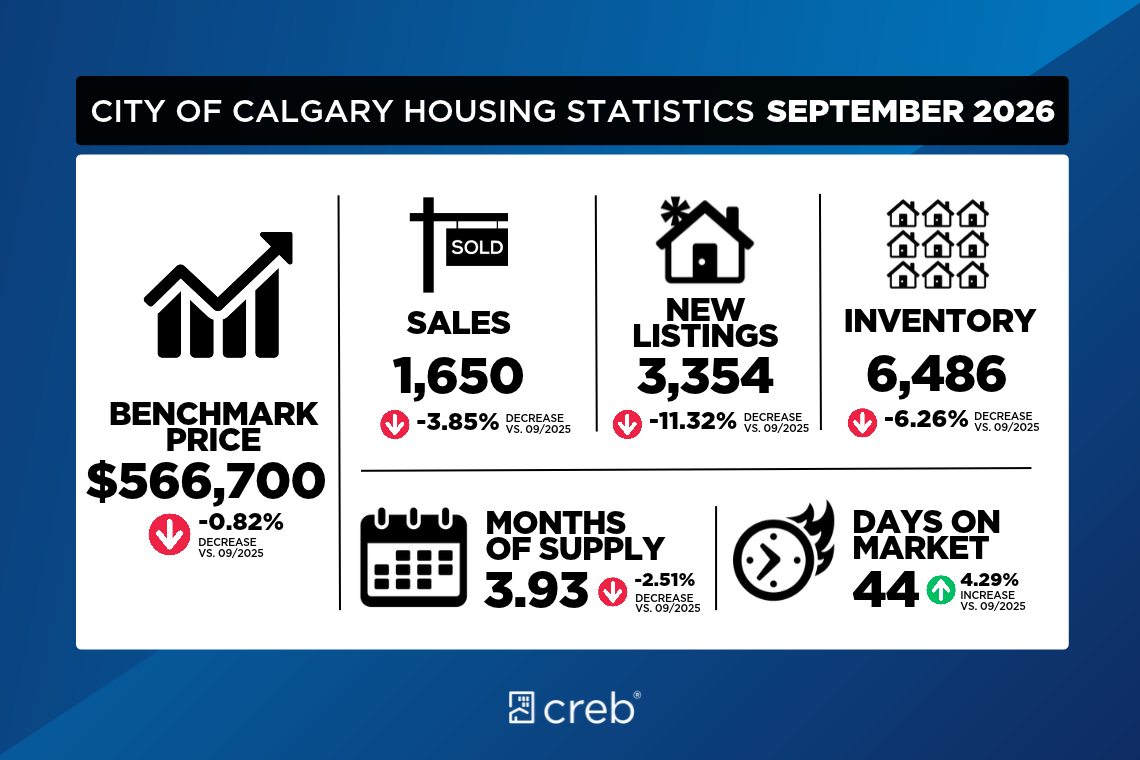
9月份卡尔加里共售出 1,650套住宅,与8月份基本持平,比2025年9月低近 4%。虽然9月份的销售量通常会较8月份出现季节性回落,但独立屋销售表现较为强劲,帮助市场避免了往年常见的明显季节性下降。与此同时,9月份新挂牌量较8月份有所增加,使销售与新挂牌比例(Sales-to-New-Listings Ratio)下降至49%,库存水平则与8月份相比基本保持稳定。

由于9月份销售量和库存水平都相对稳定,市场供应月数(Months of Supply)与8月份相比没有明显变化,仍维持在略低于4个月的水平。虽然整体市场目前呈现出供应增长速度高于销售活动的情况,但不同住宅类型之间的市场状况存在明显差异。

独立屋(Detached)市场仍处于相对平衡状态,9月份新挂牌量增加,也支持了销售量的增长。与此同时,公寓(Apartment)和排屋(Row Home)的供应水平较高,正在推动这些市场逐渐进入买方市场。这是因为买家目前面对更多选择,包括二手住宅、出租市场以及新建住宅市场。

卡尔加里房地产委员会(CREB®)首席经济学家 Ann-Marie Lurie 表示:“不同住宅类型之间市场状况的差异,与新增供应集中在哪些类型有关。过去三年的建筑热潮主要由高密度住宅市场推动,导致公寓和排屋的供应量大幅增加。”

她进一步指出:“相比之下,独立屋的建设并没有出现同等幅度的增长,因此并未形成全面性的供应增长。得益于就业市场表现较强,以及虽然放缓但仍保持正增长的净人口迁移,住房需求仍然足以吸收部分新增供应,但还不足以完全抵消高密度住宅市场增加的大量供应。这也导致高密度住宅的价格受到更加明显的影响。”


秋季市场:价格出现季节性调整

随着市场进入秋季,住宅价格出现一些未经季节调整的月度下降并不罕见。不过,其中相当一部分属于正常的季节性调整。从经过季节性调整的数据来看,9月份的住宅价格与8月份相比实际上相对稳定。9月份卡尔加里住宅的未经季节调整基准价格(Benchmark Price)为 $566,700,比去年同期低近 1%。

大部分价格调整集中在高密度住宅,尤其是排屋和公寓:

  • 排屋(Row):同比下降约 8%

  • 公寓(Apartment):同比下降约 6%

  • 独立屋(Detached):同比下降约 1%

独立屋价格的同比下降,主要来自东北区、东区和北区的价格回落。

各住宅类型市场表现

独立屋 Detached

9月份独立屋销售达到 896套,高于8月份,并且比去年同期增加超过 4%。销售改善的部分原因,是9月份新挂牌量较8月份增加,为买家提供了更多选择。

  • 销售量:896套

  • 销售/新挂牌比例:52%

  • 供应月数:略高于3个月

这些数据表明独立屋市场整体仍处于相对平衡状态。不过,不同区域之间仍存在明显差异:

  • 西北区、西区和南区:供应量少于3个月

  • 东北区:供应接近6个月

虽然整个独立屋市场总体较为平衡,但9月份未经季节调整的基准价格仍比去年同期低约 1%。价格下降主要受到东北区供应过剩的影响,该区域价格出现较明显的回落。与此同时,**市中心(City Centre)和西区(West)**的独立屋价格则高于去年同期。


半独立屋 Semi-Detached

虽然9月份半独立屋销售同比有所增长,但仍不足以抵消今年早些时候的销售下降。截至目前,今年累计销售量下降约 2%,累计销售达到 1,678套。销售下降与今年累计新挂牌量下降基本一致。

不过,9月份新挂牌量出现月度增长,使销售与新挂牌比例下降至 45%,从而推动库存增加,并使供应月数上升至接近4个月。这与2026年大部分时间里半独立屋市场相对紧张的状况相比,出现了一定变化。不过,目前判断这种趋势是否会持续到第四季度仍为时过早。虽然9月份的市场基准价$685,200 有所下降,但其中相当一部分符合正常的季节性走势,与去年同期的价格水平基本相当。


排屋 Row Homes

9月份排屋销售量较8月份有所下降,而新挂牌量则增加,使销售与新挂牌比例下降至 45%。这也导致库存量:

  • 高于去年同期

  • 高于8月份

供应月数因此首次在今年年初以来升至超过4个月。目前,新建住宅供应增加,也对二手排屋市场的销售活动造成压力。原因之一是:新房与二手住宅之间的价格差距仍然相对较小。对于买家而言,市场上更多的选择也对排屋价格形成一定压力,不过这种影响仍然没有公寓市场那么明显。截至9月份:排屋基准价格$412,400, 同比下降近 6%。所有区域的排屋价格均有所下降,其中:

  • 东北区及东区:跌幅超过 11%

  • 西北区:跌幅最小,约 2%


公寓 Apartment Condominium

9月份公寓销售较8月份有所改善,使同比销售下降速度放缓至 14%。新挂牌量同样较8月份增加。

  • 销售量:343套

  • 新挂牌量:717套

  • 销售/新挂牌比例:48%

销售量的月度改善帮助库存出现小幅下降,也避免供应月数进一步增加。供应月数目前仍维持在:略高于5个月。公寓市场供应过剩已经在今年大部分时间对价格造成压力。截至9月份:公寓基准价格$291,400, 与8月份相比下降超过 1%,与去年9月份相比则下降超过 8%。虽然部分月度价格下降属于正常季节性因素,但经过季节性调整后的价格仍然继续下降。

区域市场表现

Airdrie 

9月份Airdrie的住宅销售继续放缓,使今年累计销售量同比下降 13%。所有住宅类型的销售均出现放缓。目前,Airdrie面临来自以下市场的竞争:

  • 新建住宅市场

  • 卡尔加里住宅市场

  • 周边其他城市

这些因素都对住房需求造成了一定压力。虽然9月份销售下降,但新挂牌量也有所减少,库存量较8月份出现下降。不过,销售下降的幅度超过库存下降,因此供应月数上升至:4个月. 市场上更多的供应选择也继续对价格形成压力。截至9月份:Airdrie住宅总基准价格:$505,800, 同比下降近 4%。所有住宅类型的价格均有所下降,其中高密度住宅的跌幅最大。


Cochrane 

虽然Cochrane 9月份销售量较前一个月有所下降,但仍高于去年同期。从今年累计数据来看,销售量同比增加近 6%。销售增长的同时,新挂牌量也有所增加。值得注意的是:今年Cochrane的新建住宅挂牌量约占全部新挂牌量的30%。

  • 新挂牌:163套

  • 销售:68套

  • 销售/新挂牌比例:42%

这是自今年1月份以来最低的月度比例。这导致库存增加,并使供应月数上升至:5个月. 虽然市场在这个月出现了变化,但9月份价格较8月份有所改善,并且与去年同期的价格水平基本相当。


Okotoks 

9月份新挂牌量增长速度高于销售增长,使销售与新挂牌比例下降至:76%. 虽然这一比例仍高于大多数其他地区,但低于过去两个月超过 80% 的水平。

  • 库存:122套

  • 销售:56套

  • 供应月数:略高于2个月

因此,Okotoks市场整体仍然相对紧张。不过,今年早些时候,新建住宅市场以及周边竞争市场供应增加,对当地住宅价格形成了一定压力。截至9月份:住宅总基准价格:$606,800, 与去年9月份相比基本稳定。从今年累计数据来看,价格仅比去年低约 1%。


Chestermere 

9月份Chestermere销售量有所增加,在一定程度上抵消了新挂牌量增加带来的影响。虽然销售与新挂牌比例仍然偏低,仅为:38%. 但库存量较8月份有所下降,使供应月数重新回落至:低于6个月.

过去几个月,Chestermere大量的新建住宅供应,以及来自卡尔加里和周边地区的竞争性供应,都对当地住宅价格造成了一定压力。不过,从今年累计来看,价格仅比去年低约 1%。9月份住宅总基准价格:$690,200, 价格较8月份有所下降,但与去年同期相比基本相近。

Read

Detached home sales improve in September

Calgary, Alberta, Oct. 1, 2026 – September sales totalled 1,650 units, similar to August and nearly four per cent lower than in September 2025. While September sales typically pull back compared with August, stronger detached home sales helped prevent the typical seasonal pullback.

At the same time, new listings also rose from August, causing the sales-to-new-listings ratio to fall to 49 per cent, leaving inventory levels relatively stable compared with August. Stable sales and inventory levels in September prevented any change in the months of supply compared with August, which remained at just under four months. 

While the overall market is showing higher supply levels compared with sales activity, conditions vary significantly by property type. Detached properties remain in balanced territory, and the monthly boost in new listings supported gains in sales in September. Meanwhile, higher supply levels for apartment and row homes are contributing to buyer market conditions, as demand is spread across more alternatives in the rental and new home markets. 

“The variation in market conditions between property types is related to where the supply was added. The construction boom over the past three years was mostly driven by gains in higher-density sectors, significantly increasing the supply of apartment and row-style homes,” said Ann-Marie Lurie, Chief Economist at the Calgary Real Estate Board (CREB®). “Meanwhile, detached homes did not see the same boost in construction, preventing broad-based supply growth. Thanks to a stronger job market and slower but positive net migration, housing demand has remained strong enough to absorb some of the supply, but not enough to offset the high-density supply added to the market, resulting in a more significant impact on prices for higher-density homes.” 

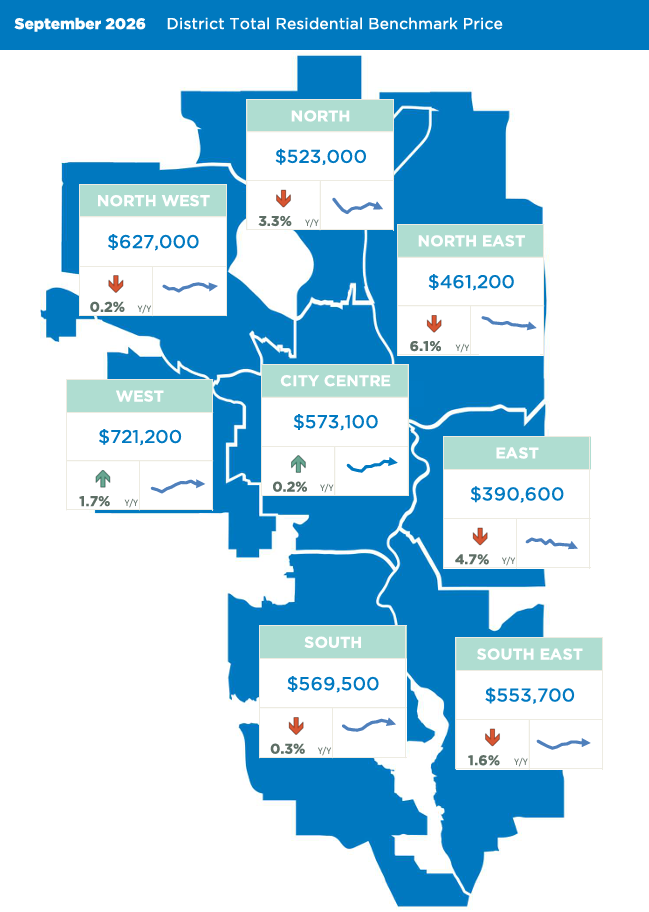
As the market moves through the fall, it is not unusual to see some unadjusted monthly declines in prices. However, many of these adjustments were seasonal, as seasonally adjusted figures show that prices in September are relatively stable compared with August. The unadjusted residential benchmark price was $566,700, nearly one per cent lower than last year. Most of the price adjustments have occurred in higher-density row and apartment-style units, which have reported year-over-year declines of eight per cent and six per cent in September. Meanwhile, detached prices are one per cent lower than last year, mostly due to declines in the North East, East and North districts.   

Detached

Sales in September reached 896 units, up from August and more than four per cent higher than last year. The improvement in sales was partly due to a boost in new listings in September compared with August, giving consumers more options. With a sales-to-new-listings ratio of 52 per cent and a months of supply at just over three months, conditions remained relatively balanced. However, conditions have varied across the city, with less than three months of supply in the North West, West and South districts, and nearly six months of supply in the North East district. While the overall market is relatively balanced, the unadjusted benchmark price was one per cent lower than last year. The decline was primarily driven by steep pullbacks in the oversupplied North East district. Meanwhile, prices were higher than last year in both the City Centre and West districts.   

Semi-Detached

The year-over-year gain in sales was not enough to offset earlier declines, as year-to-date sales have declined by two per cent for a total of 1,678 sales. The decline in sales matched year-to-date declines in new listings, but a monthly boost in September listings caused the sales-to-new-listings ratio to dip to 45 per cent, contributing to monthly inventory gains and pushing months of supply to nearly four months. While this is a shift from the tighter conditions reported in this sector throughout most of 2026, it is too early to say whether this will continue into the final quarter. While unadjusted prices did trend down in September, much of the decline was in line with typical seasonal behaviour. The unadjusted September benchmark price was $685,200, comparable to levels reported last year at this time.

Row

Sales in September eased compared with August, while new listings rose, causing the sales-to-new-listings ratio to drop to 45 per cent. This also contributed to higher inventory levels compared with both last year and August, resulting in the months of supply rising above four months for the first time since the beginning of the year. Additional competition from new units has weighed on resale activity, as the price spread between new and resale homes remains relatively narrow. The additional supply choice for buyers has also weighed on row prices, but not to the same extent as in the apartment sector. As of September, the unadjusted benchmark price was $412,400, down nearly six per cent from last year. While prices have declined across all districts, the steepest declines, at more than 11 per cent, have occurred in the North East and East districts, while the smallest declines have occurred in the North West, at two per cent. 

Apartment Condominium

Apartment sales improved from August, slowing the year-over-year pace of decline to 14 per cent. New listings also rose over August, with 343 sales and 717 new listings, leaving the sales-to-new-listings ratio at 48 per cent. The monthly gains in sales supported modest reductions in inventory levels and prevented any further increases in the months of supply, which remained just above five months. The excess supply of apartment-style units has weighed on prices throughout most of the year. As of September, the unadjusted benchmark price fell to $291,400, down more than one per cent compared with August and more than eight per cent lower than last September. While some of the monthly decline is seasonal, seasonally adjusted prices continued to decline.  

REGIONAL MARKET FACTS


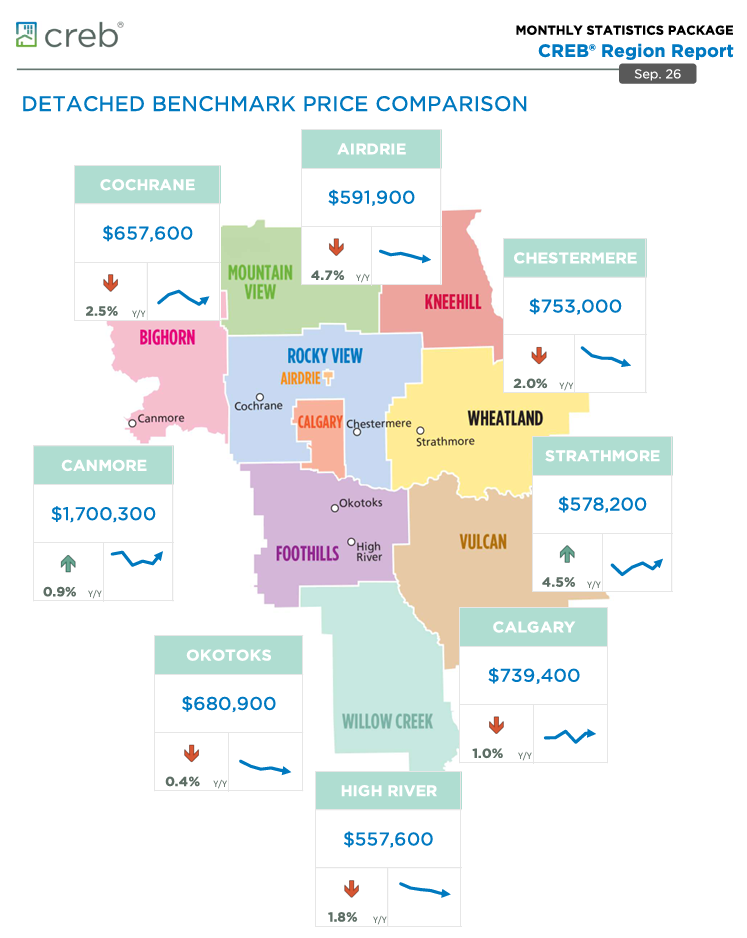
Airdrie

Sales in Airdrie continued to slow in September, contributing to the year-to-date decline of 13 per cent. Sales slowed across all property types, as increased competition from the new home market and competing markets in Calgary and other surrounding areas are weighing on demand. While sales eased in September, new listings also slowed and inventories trended down compared with August. However, the pullback in sales outpaced the inventory declines and the months of supply rose to four months. Additional supply choice continues to weigh on prices as well. As of September, the unadjusted total residential benchmark price was $505,800, nearly four per cent lower than last year. Prices have eased across each property type, with the largest declines occurring for higher-density homes.

Cochrane

Despite the monthly pullback, sales remained higher than last year, and on a year-to-date basis, sales have increased by nearly six per cent. The rise in sales came with an increase in new listings, with new homes accounting for nearly 30 per cent of this year’s total listings. With 163 new listings and 68 sales, the sales-to-new-listings ratio dropped to 42 per cent in September, the lowest monthly level seen since January. This contributed to higher inventory and pushed the months of supply to five months. Despite this one-month shift, prices improved compared with August and are similar to last year’s levels.  

Okotoks

An increase in new listings compared with sales caused the sales-to-new-listings ratio to drop to 76 per cent in September, still higher than most other areas, but below the ratios of more than 80 per cent reported over the past two months. With 122 units in inventory and 56 sales, conditions remain relatively tight with just over two months of supply. Despite tighter conditions, increased competition from the new home market and competing markets has weighed on prices earlier this year. However, with an unadjusted total residential benchmark price of $606,800 in September, prices are stable relative to last September and are only one per cent lower on a year-to-date basis. 

Chestermere

Sales in September rose, helping to offset some of the gains in new listings. While the sales-to-new-listings ratio remained low at 38 per cent, inventory levels trended down from August and brought the months of supply back below six months. Significant new construction in the area, along with competing supply in Calgary and other surrounding areas, has weighed on prices in Chestermere over the past few months. However, year-to-date prices are only one per cent lower than last year. The unadjusted total residential benchmark price was $690,200 in September, down from August but similar to last year’s levels. 

Read
Data is supplied by Pillar 9™ MLS® System. Pillar 9™ is the owner of the copyright in its MLS®System. Data is deemed reliable but is not guaranteed accurate by Pillar 9™.
The trademarks MLS®, Multiple Listing Service® and the associated logos are owned by The Canadian Real Estate Association (CREA) and identify the quality of services provided by real estate professionals who are members of CREA. Used under license.